 Русский
 English
 Español


Cubic Boron Nitride Powder: The Superhard Material That Outperforms Diamond on Steel
Cubic boron nitride (CBN) powder occupies a peculiar position in the world of advanced materials. It is the second-hardest substance known, trailing only diamond on the hardness scale. Yet in one critical domain—machining ferrous metals—it leaves diamond far behind.
CBN does not exist in nature. It was first synthesized in 1957 by transforming hexagonal boron nitride under pressures of 3.45 to 6.2 MPa and temperatures between 2,800°F and 3,700°F, using catalysts such as alkali metals or magnesium . The resulting crystal structure mirrors diamond’s: two interpenetrating face-centered lattices, one of boron atoms and one of nitrogen, bound in a rigid covalent network with roughly 25% ionic character. Hardness ranges from 40 to 55 GPa depending on crystal orientation—far beyond any metallic carbide.
The Advantage Over Diamond
Diamond’s fatal flaw in industrial machining is its affinity for iron. At the temperatures generated during grinding or cutting steel, diamond reacts with the workpiece, degrading rapidly. CBN, by contrast, is chemically inert against ferrous alloys. It remains thermally stable in air above 1,000°C, with oxidation completing only around 1,500°C. The boron oxide layer that forms on its surface actually protects against further oxidation, enabling cutting speeds of 30 to 61 meters per second.
This combination—near-diamond hardness plus iron compatibility—makes CBN powder indispensable for grinding and machining hardened tool steels, high-speed steels, and superalloys. The automotive industry relies on it for finishing engine blocks, gears, shafts, and bearings where tolerances are measured in microns.
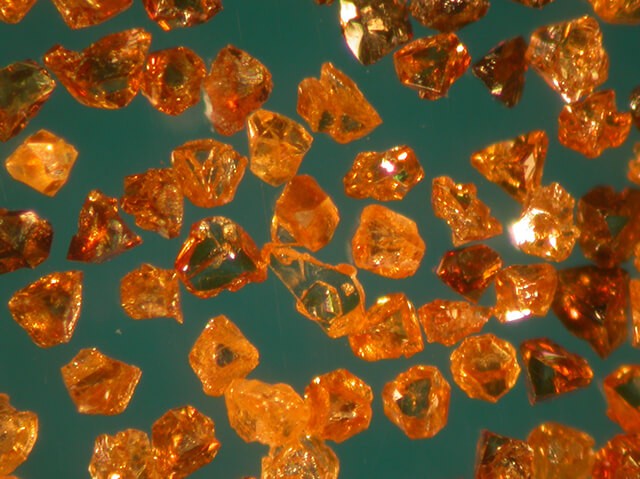
From Powder to Tool
The powder itself is typically synthesized in fine crystalline form, then consolidated into cutting tools. Conventional CBN sintered bodies contain 10 to 50 volume percent of binder materials such as cobalt or titanium nitride, which lower hardness but improve toughness . More recent developments have produced high-purity polycrystalline CBN with over 99.9% CBN content, achieving hardness of 50–55 GPa at room temperature and maintaining 20 GPa even at 1,000°C—a level conventional binder-containing grades cannot approach.
The powder’s fine grain size—often below 0.5 micrometers in advanced grades—allows for extremely sharp cutting edges when properly consolidated, enabling surface finishes comparable to grinding while removing material far more efficiently.
A Material Defined by Trade-offs
CBN powder is not without complications. Its affinity for water vapor means wet grinding can hydrolyze the protective oxide layer, generating boric acid and ammonia. In practice, however, wet grinding with CBN outperforms dry grinding when using straight sulphurated mineral oil or high-concentration emulsified oils. Cost remains another barrier: CBN tools command prices that manufacturers justify through time savings rather than direct tool-cost reduction.
Beyond cutting tools, CBN’s wide bandgap and thermal stability have drawn interest for deep-UV detectors and high-power microwave field-effect transistors, though these electronic applications remain largely in the research stage.
For now, CBN powder’s kingdom is the machine shop—a quiet enabler of the hardened steel components that underpin modern vehicles, aircraft, and industrial machinery. It is a material that does not seek the spotlight diamond comands, but in the domains where diamond fails, it has no equal.
Inquiry
Please leave us your requirements, we will contact you soon.