 Русский
 English
 Español


Synthetic Diamond Powder: The Superhard Material Empowering Modern Precision Manufacturing
Synthetic diamond powder is a finely divided superhard abrasive made of artificially produced diamond crystals, sharing the same chemical composition and crystal structure as natural diamond, but produced in laboratories and factories rather than mined from the earth. As one of the most essential advanced engineering materials today, it has gradually replaced natural diamond powder in nearly all industrial scenarios thanks to controllable quality, stable supply and competitive cost, and becomes the backbone of precision machining, semiconductor manufacturing and high-end optical processing.
There are three mainstream manufacturing routes for synthetic diamond powder. The most widely used is the HPHT (High-Pressure High-Temperature) method. Graphite, together with metal catalysts, is sealed inside special equipment and exposed to pressure above 4 GPa and temperatures around 1200–1500 °C, simulating the geological environment where natural diamonds form deep underground, turning soft graphite into hard diamond crystals. After crushing, purification, grading and surface treatment, the crystals become powder with specified particle sizes ranging from coarse grits down to nanometer scale. The second technology is CVD (Chemical Vapor Deposition), which breaks down carbon-containing gas such as methane under low-pressure plasma conditions and deposits diamond grains. CVD diamond powder usually features higher purity and fewer internal defects, suitable for ultra-precision polishing and heat-conductive composite materials. Detonation synthesis is another special route: explosive shock instantly converts carbon sources into tiny nanodiamond particles, mainly used for ultra-fine polishing liquid and lubricant additives. Manufacturers can adjust crystal shape, toughness, particle size distribution and surface chemical groups according to different application needs, a flexibility that natural crushed diamond powder cannot match.
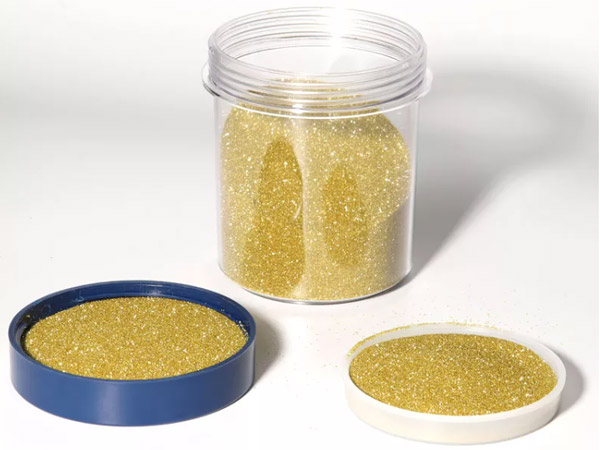
The outstanding properties make synthetic diamond powder irreplaceable. It retains diamond’s highest Mohs hardness among all known materials, paired with excellent thermal conductivity, stable chemical inertness and low friction coefficient. Compared with traditional abrasives like silicon carbide and alumina, it cuts hard materials faster and wears far more slowly, greatly extending the service life of grinding tools and improving processing consistency. Unlike natural diamond powder limited by mining output, impurity fluctuation and ethical risks, synthetic diamond powder can be mass-produced with tightly controlled particle grades. Monocrystalline diamond powder has sharp edges for fast grinding and cutting, while polycrystalline diamond powder fractures microscopically during work and constantly generates new cutting edges, delivering smoother polishing surfaces with less scratching risk.
Its application landscape stretches across dozens of high-value industries. In tool manufacturing, it is bonded into diamond grinding wheels, saw wires, drill bits and dressing sticks for machining cemented carbide, advanced ceramics, sapphire and hard alloy molds. In the optoelectronic and semiconductor sectors, micron and nanoscale diamond powder serves as polishing media for optical lenses, laser crystals, silicon wafers and gallium nitride substrates; the flawless surface finish it achieves directly determines the performance of optical devices and chip yield. It also enters the jewelry industry for gemstone polishing, the automotive industry for precision engine component lapping, and composite material research as reinforcing filler to boost thermal dissipation and mechanical strength. Even cosmetic and high-performance lubricant products add modified nanodiamond powder to reduce wear.
As advanced manufacturing keeps pursuing higher precision, synthetic diamond powder continues to evolve. Researchers are developing ultra-fine monodisperse nanodiamond powder, functional surface coating technology and composite diamond abrasives to meet the demands of next-generation chips, aerospace ceramics and quantum optical components. Looking back decades ago, natural diamond was the only industrial superabrasive; today synthetic diamond powder dominates the global market. It proves that human technology can replicate and even optimize nature’s strongest crystal, quietly supporting the progress of precision industry from macroscopic stone cutting down to atomic-level surface finishing.
Inquiry
Please leave us your requirements, we will contact you soon.